
Professional
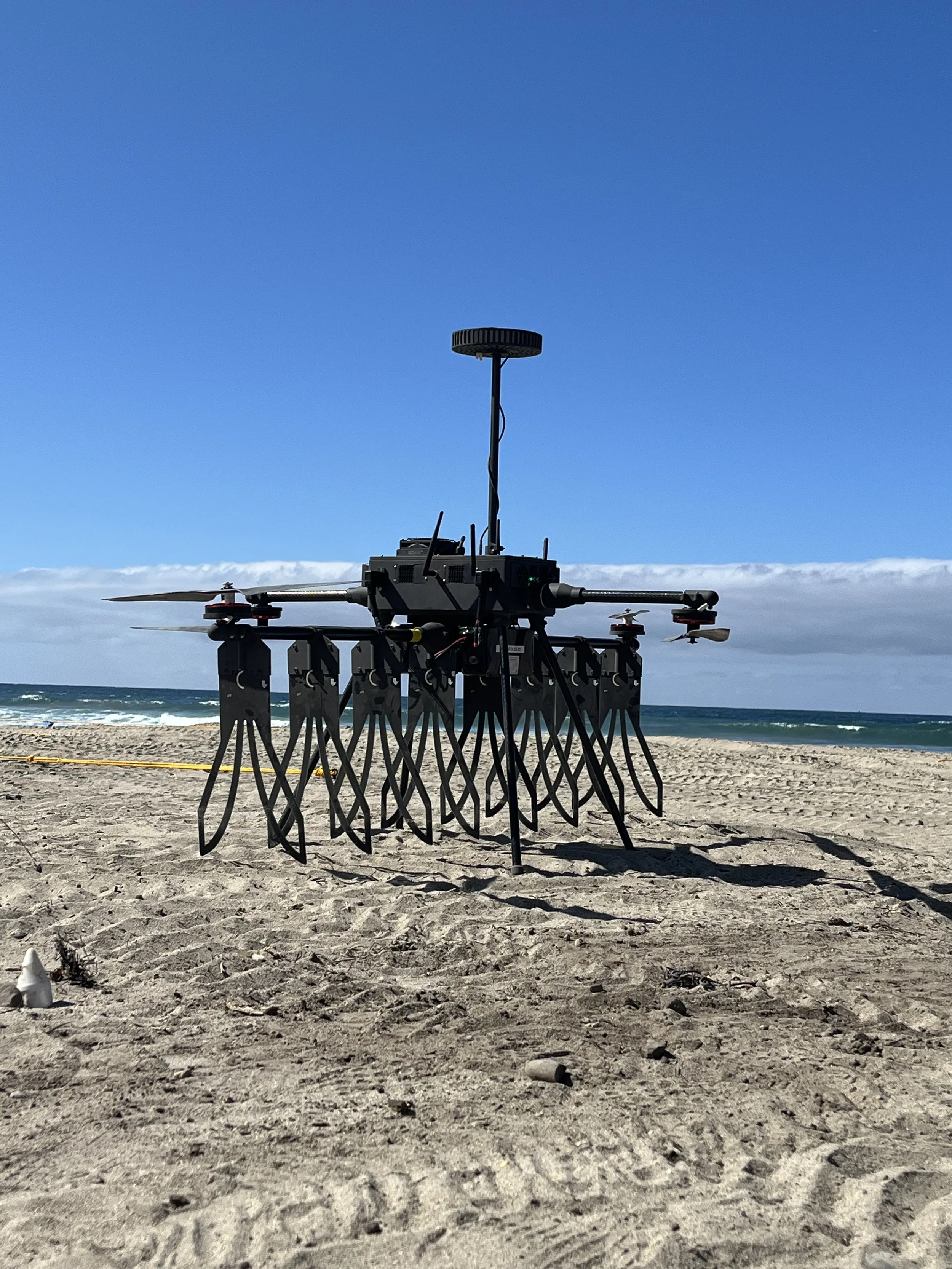
Drone Design at Lawrence Livermore National Labratory
Since 2023, I have worked on a small team at LLNL specializing in designing custom novel drone platforms from the ground up. We are an unusual team at this lab– moving rapidly through the prototype to product cycle, designing end user products for mass manufacturing, and using a machine shop as engineers.
The photos and descriptions I can share are extremely limited due to the cleared nature of the work. Broadly, we design unmanned aerial and ground vehicles to support a multitude of sensors, primarily ground penetrating radar. These drones do NOT carry weapons. As a designer, my role has been to transition an R&D platform to a ruggedized drone that can be disassembled and packed with little training. Working on aircraft, ultra light weight design that maintains electrical robustness and waterproofing has been critical.
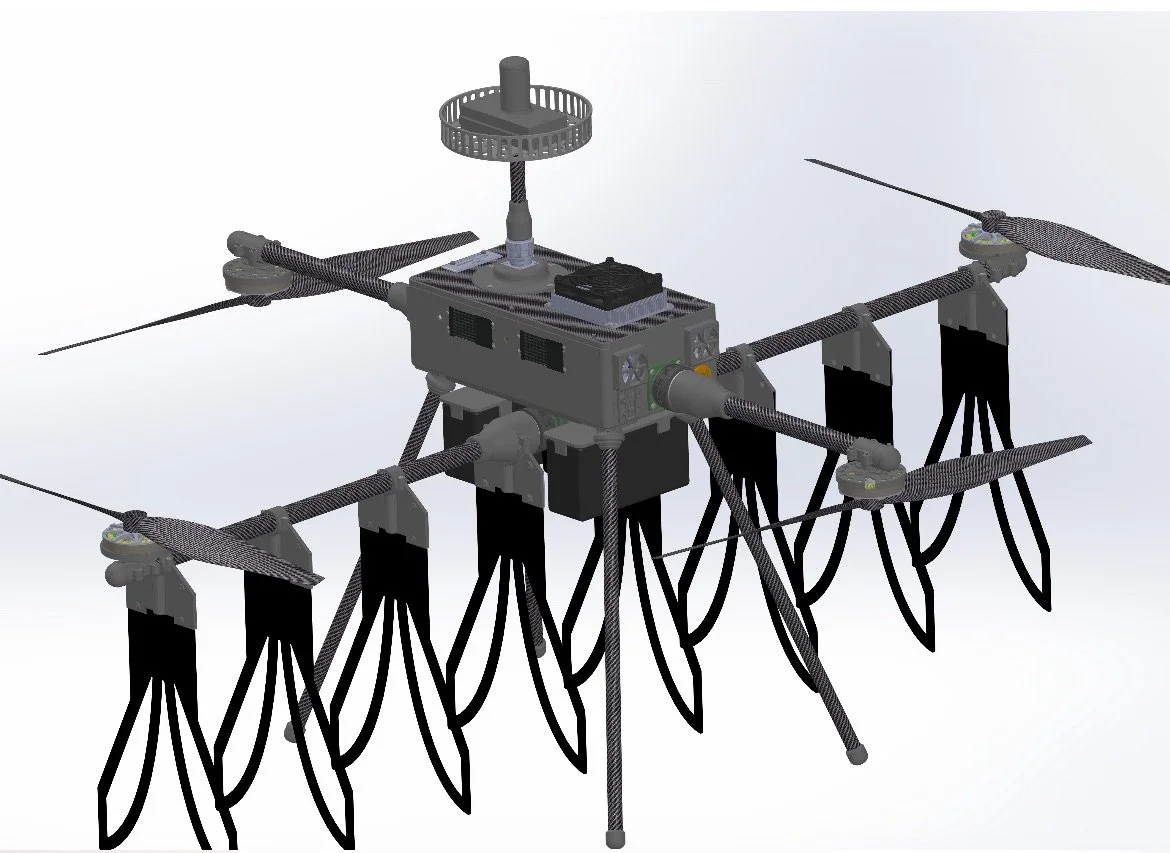
I was responsible for mechanical design and CAD of this drone
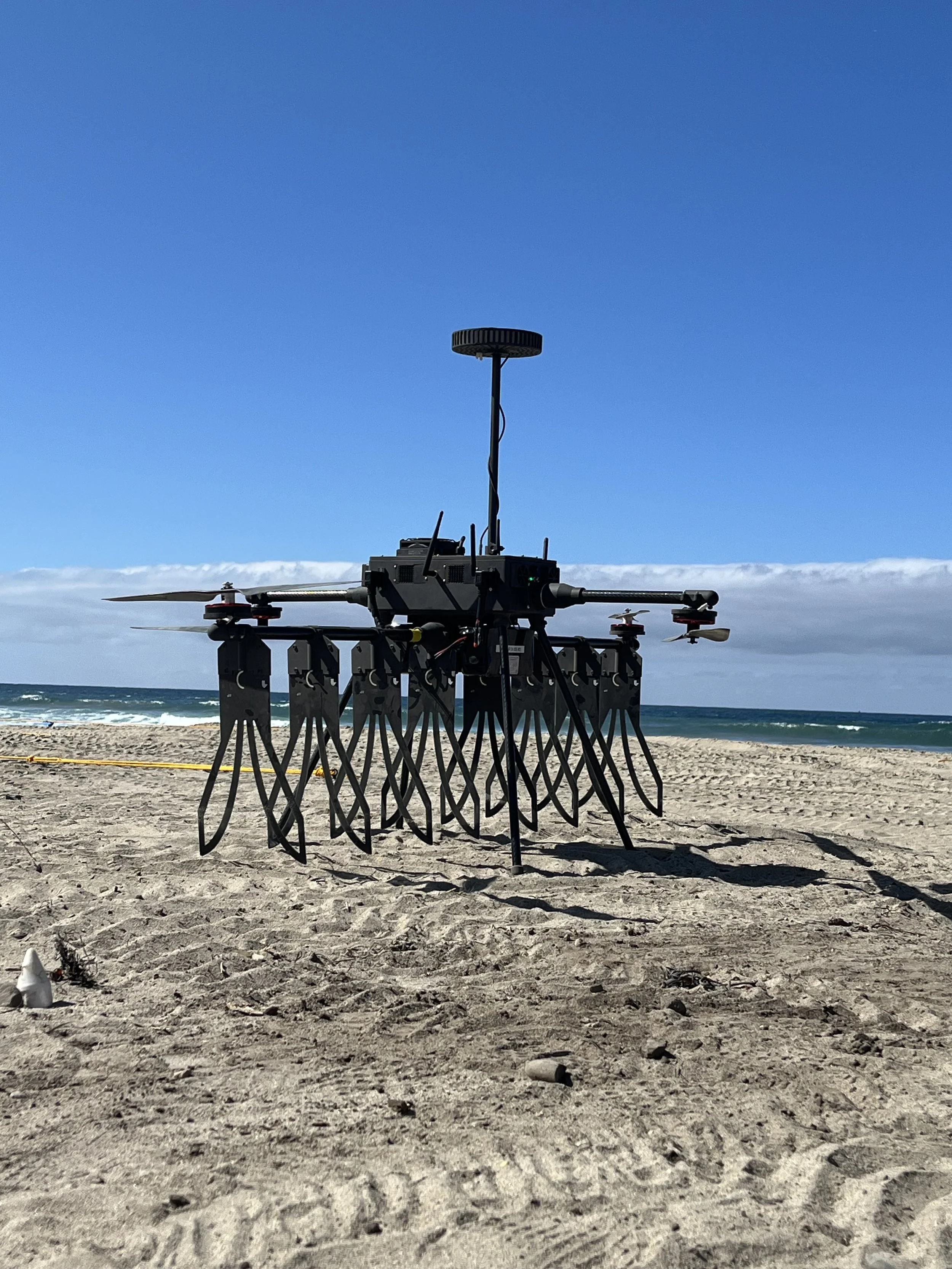
We moved from CAD to the beach in 3 months
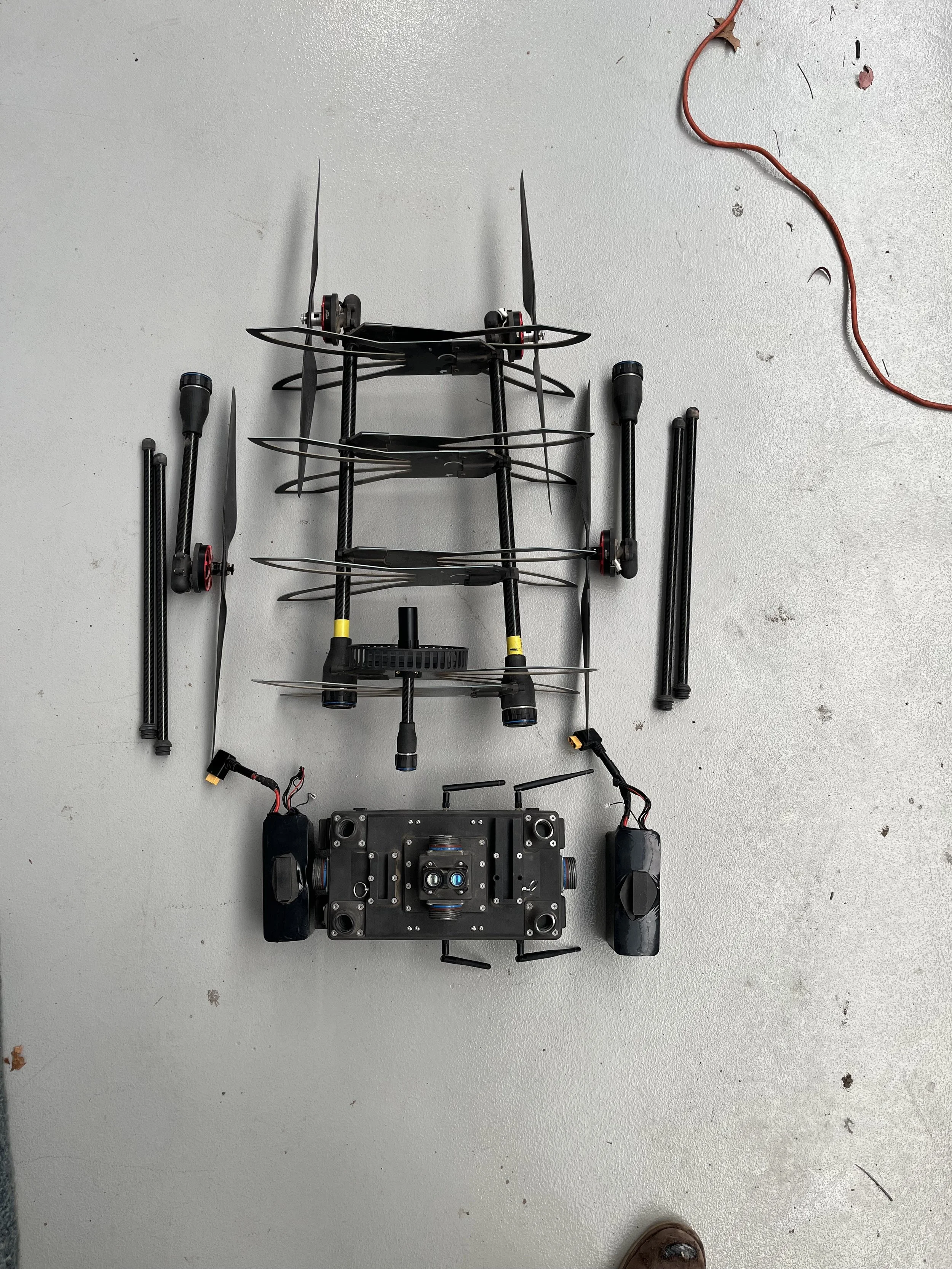
Drone in packing state
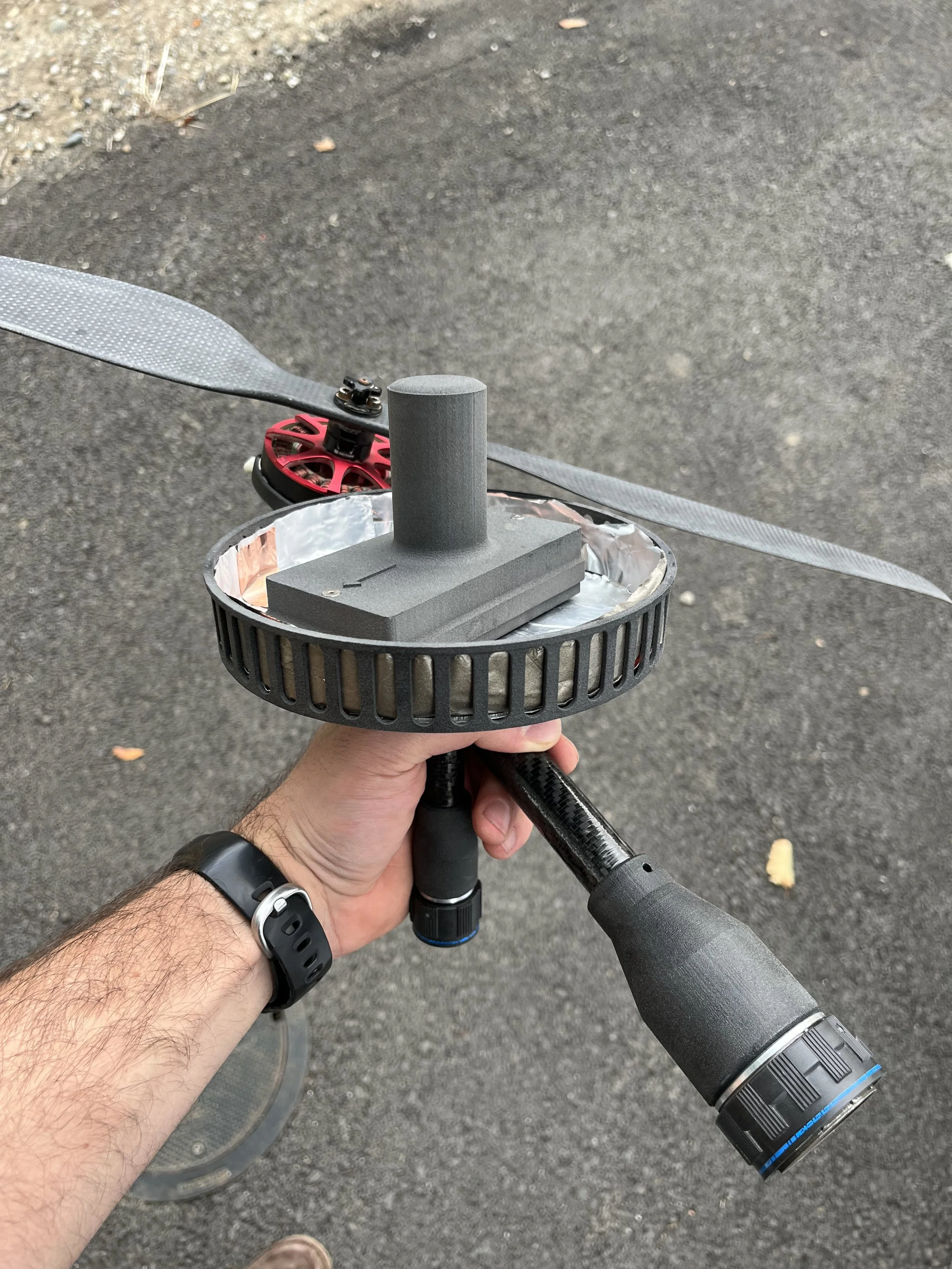
Drone Components in Disassembled State
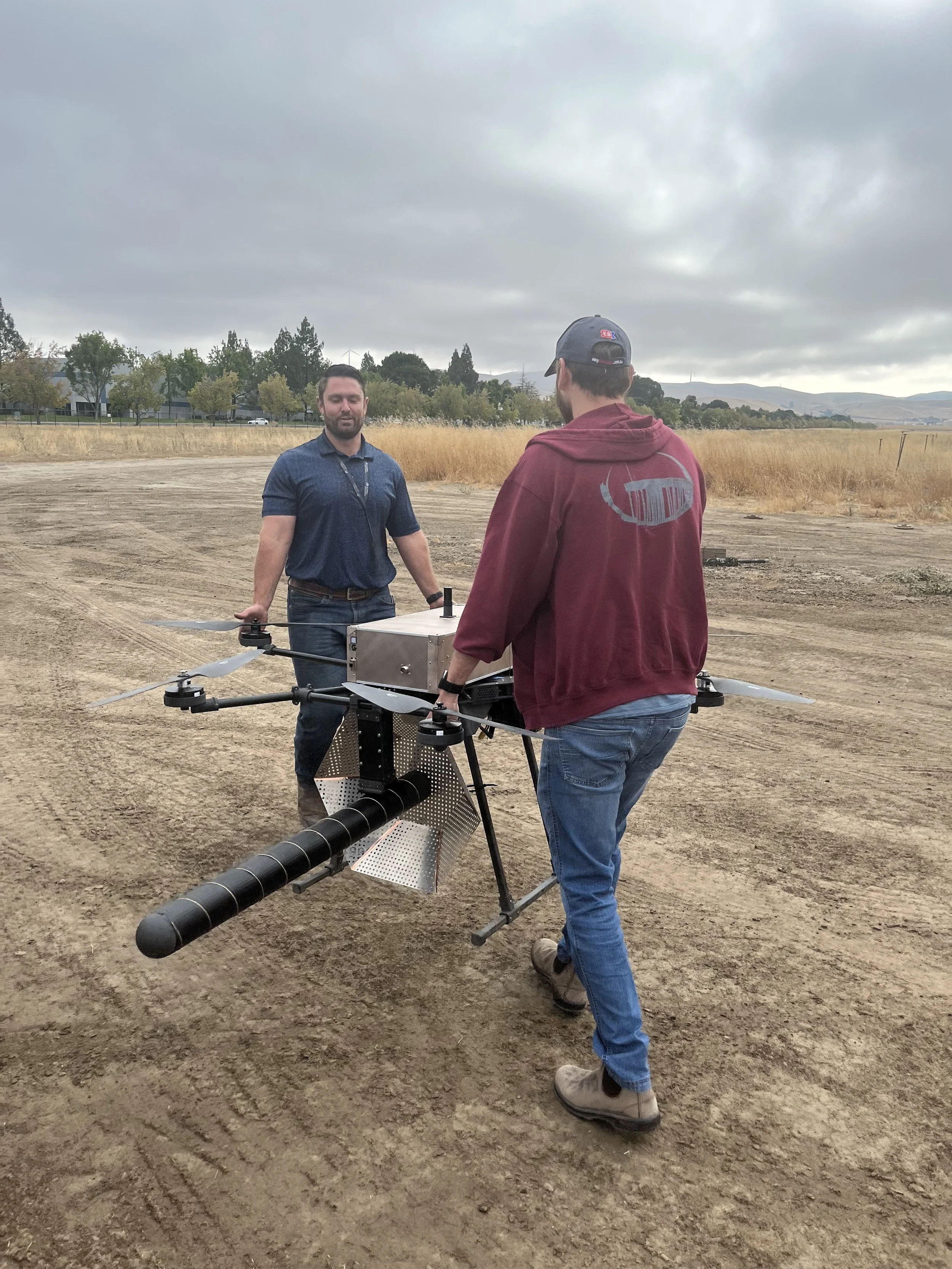
100 lb Drone
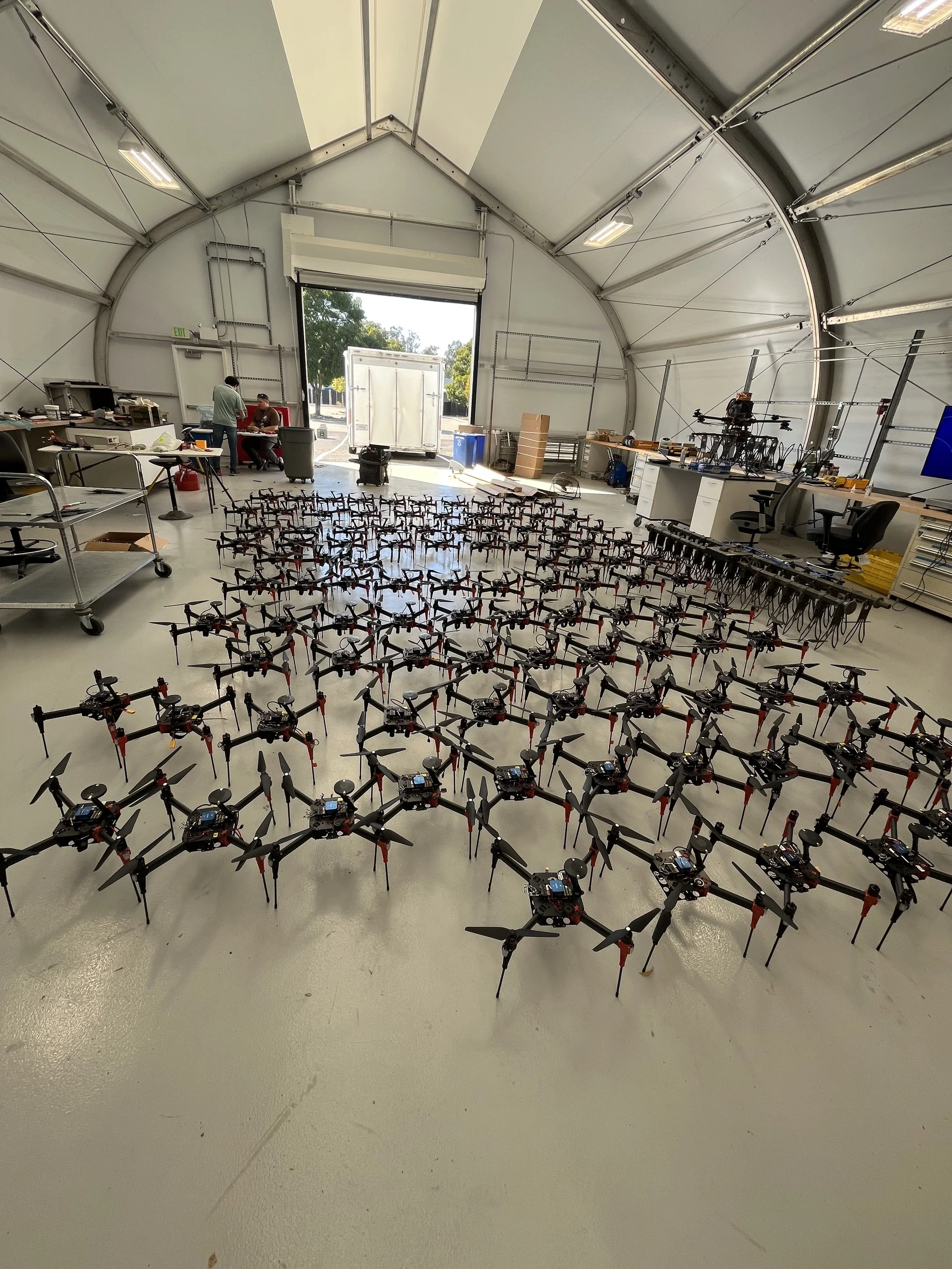
Drone Swarm
I have touched every part of this mechanical design, and I have put a lot of thought into making a product that can’t be misassembled and is easy to repair. I have also worked to balance making designs that we are capable of producing in small batches in our lab but that will be able to be scaled for manufacturing when the time comes. I work directly with the end user at field events, observe them interacting with prototypes, and incorporate their feedback. To see a design through from an R&D platform to a delivered product has required extremely interdisciplinary work as electrical and mechanical components are integrated.
Senior Capstone Project: Ice-Cream Machine
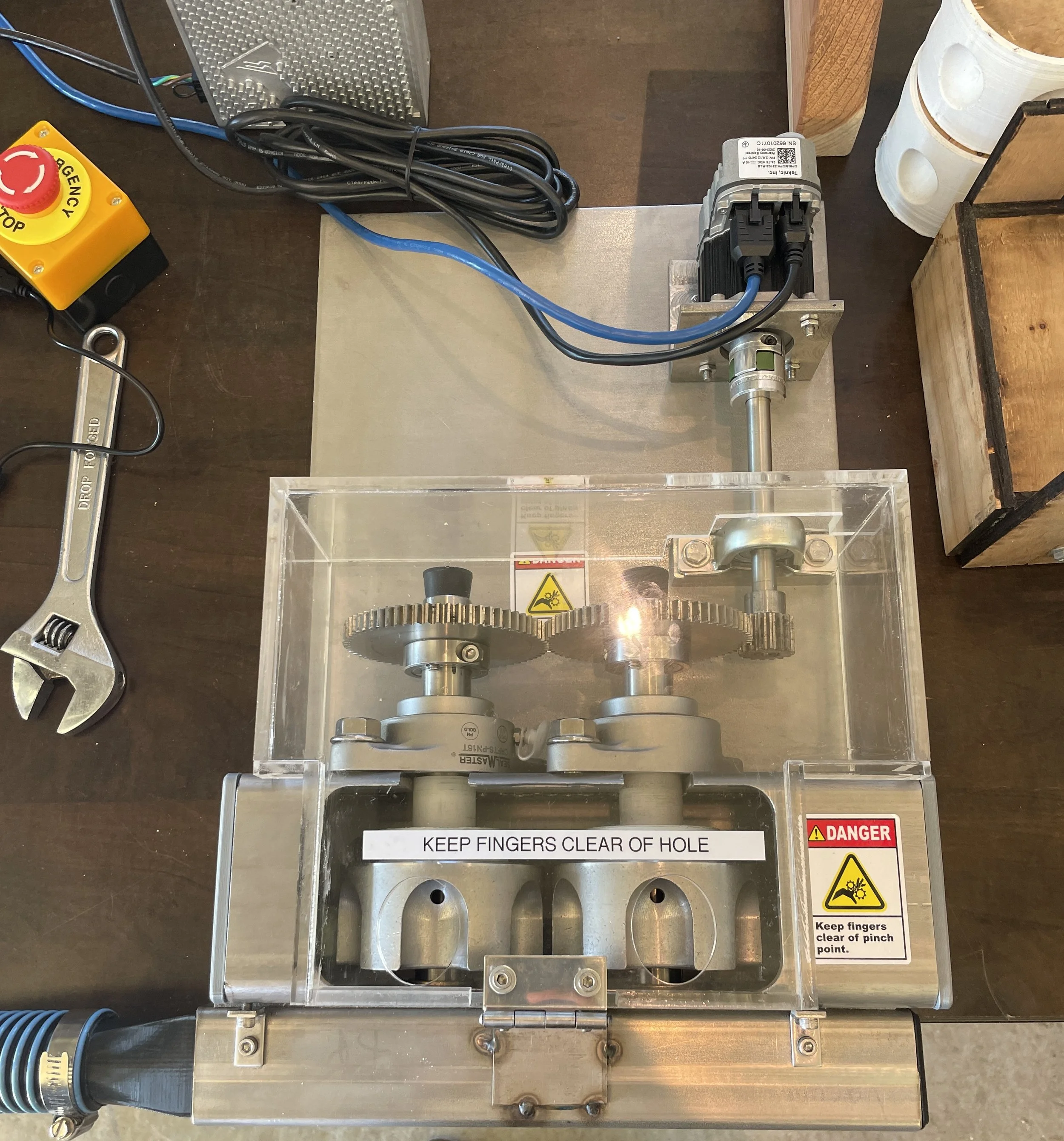
As senior engineering students at Cal Poly, we were approached by a sponsor trying to build a novelty icecream product consisting of soft serve in a walnut shaped cake cone-pod. He asked our team of four to design a machine to replace hand assembly of these ice-cream pods. The first phase was a lot of brainstorming using techniques from the Stanford d.school that were taught in our senior project class. Next, we began prototyping to figure out how we could manipulate the fragile shells without breaking them.
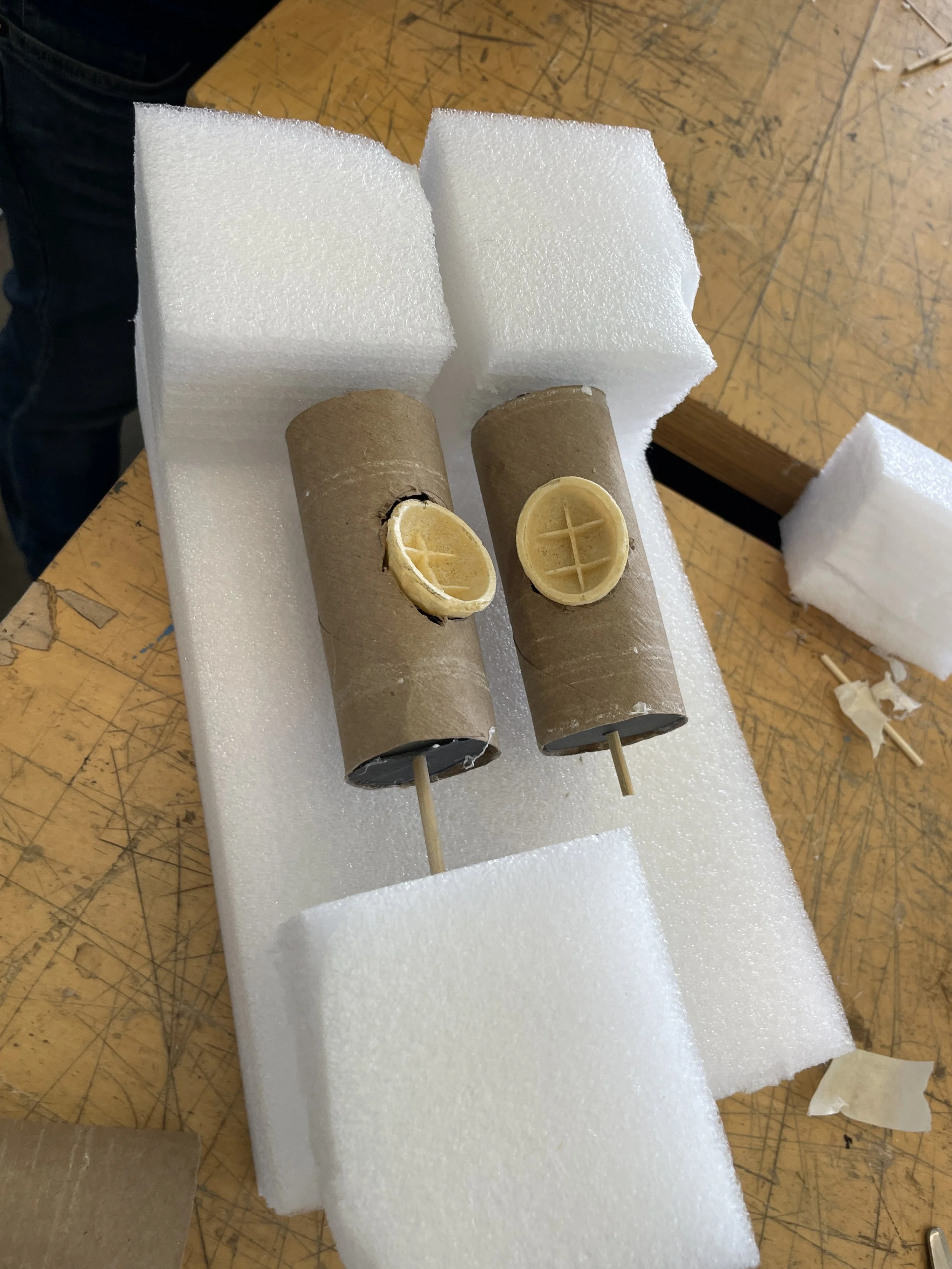
Cardboard and foam prototype of two wheel idea
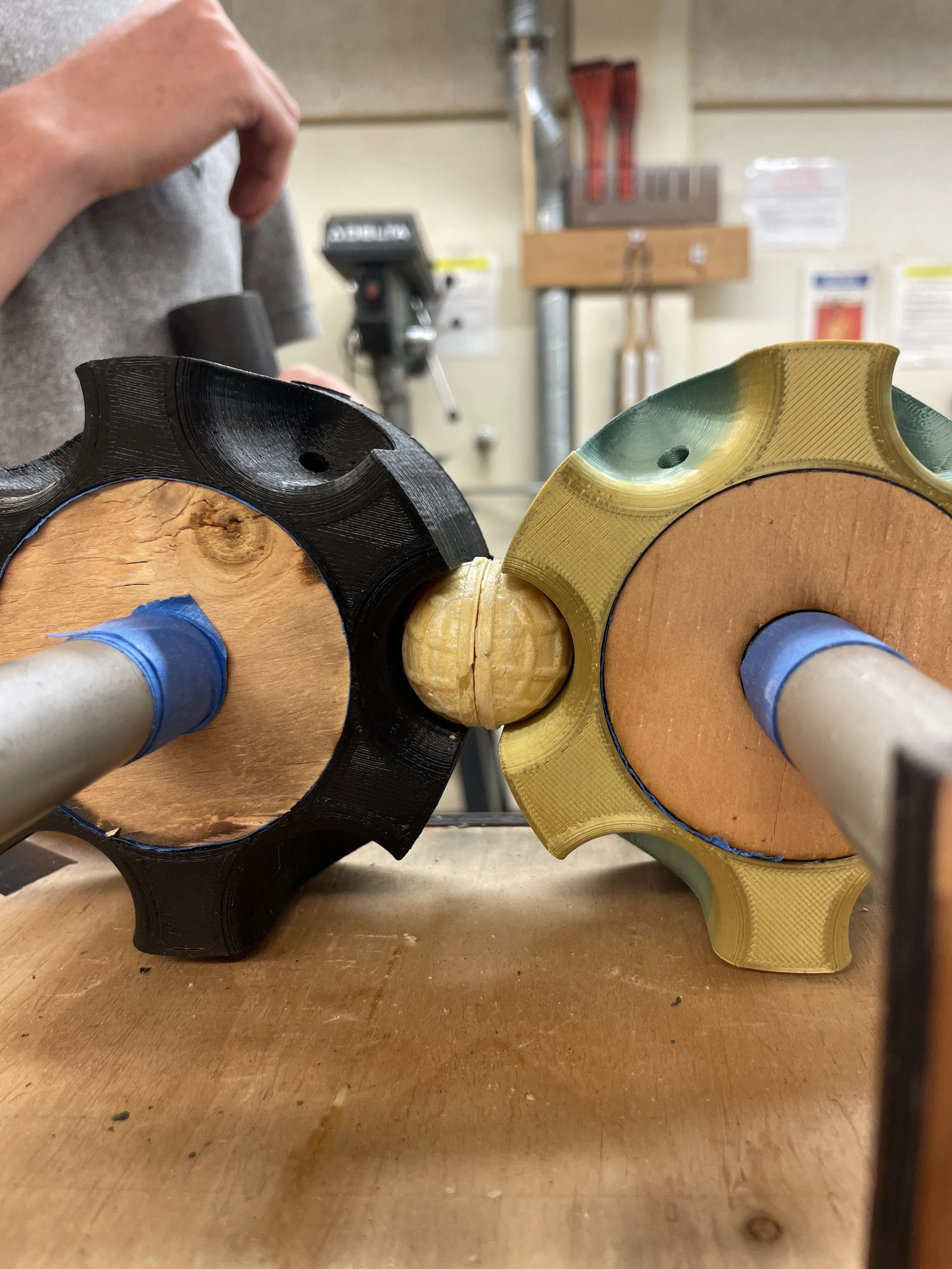
3D printed and wood prototype of two wheel idea
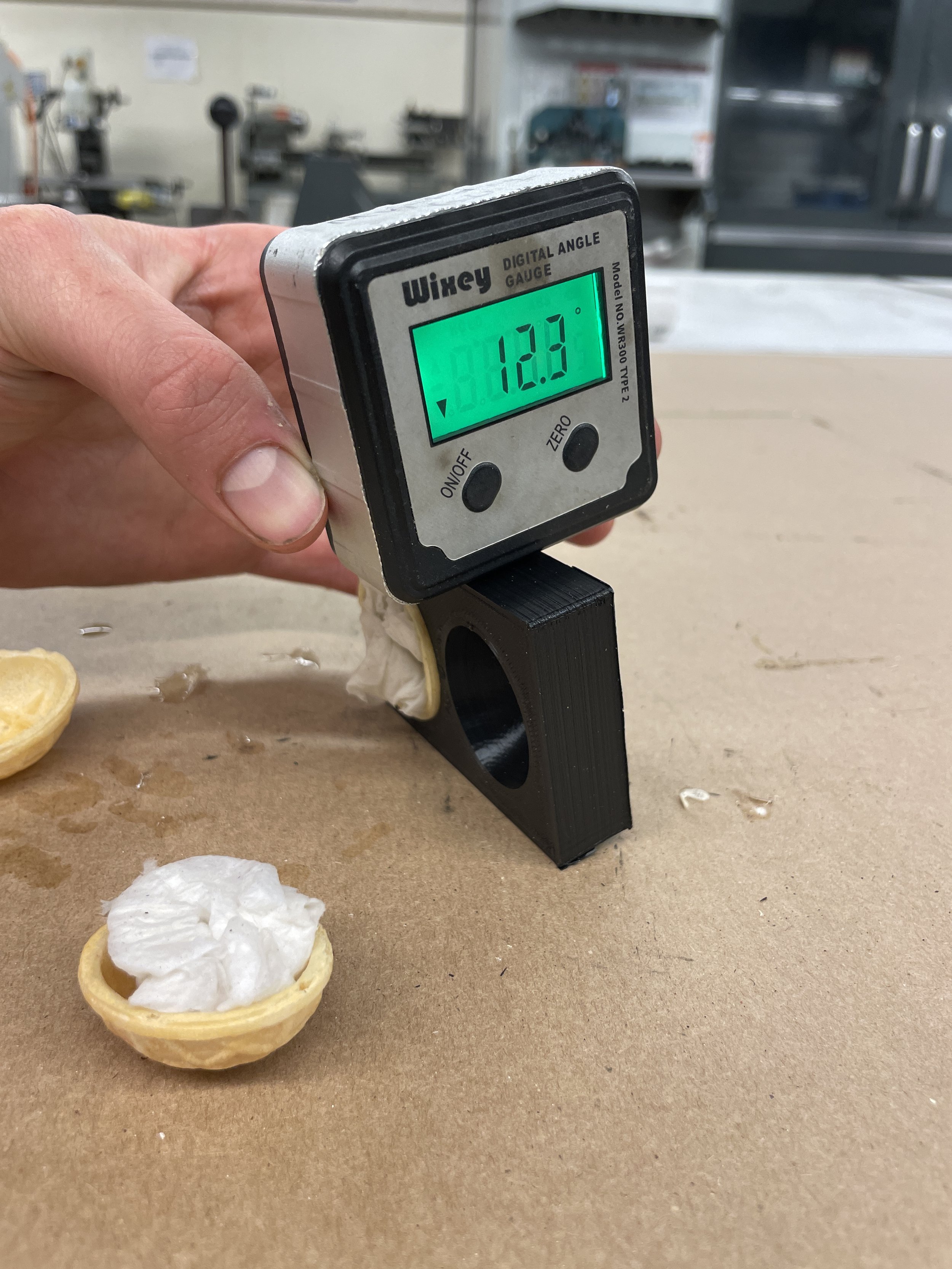
Testing the angle shells fall out of wheel with 3D printed jig and digital protractor
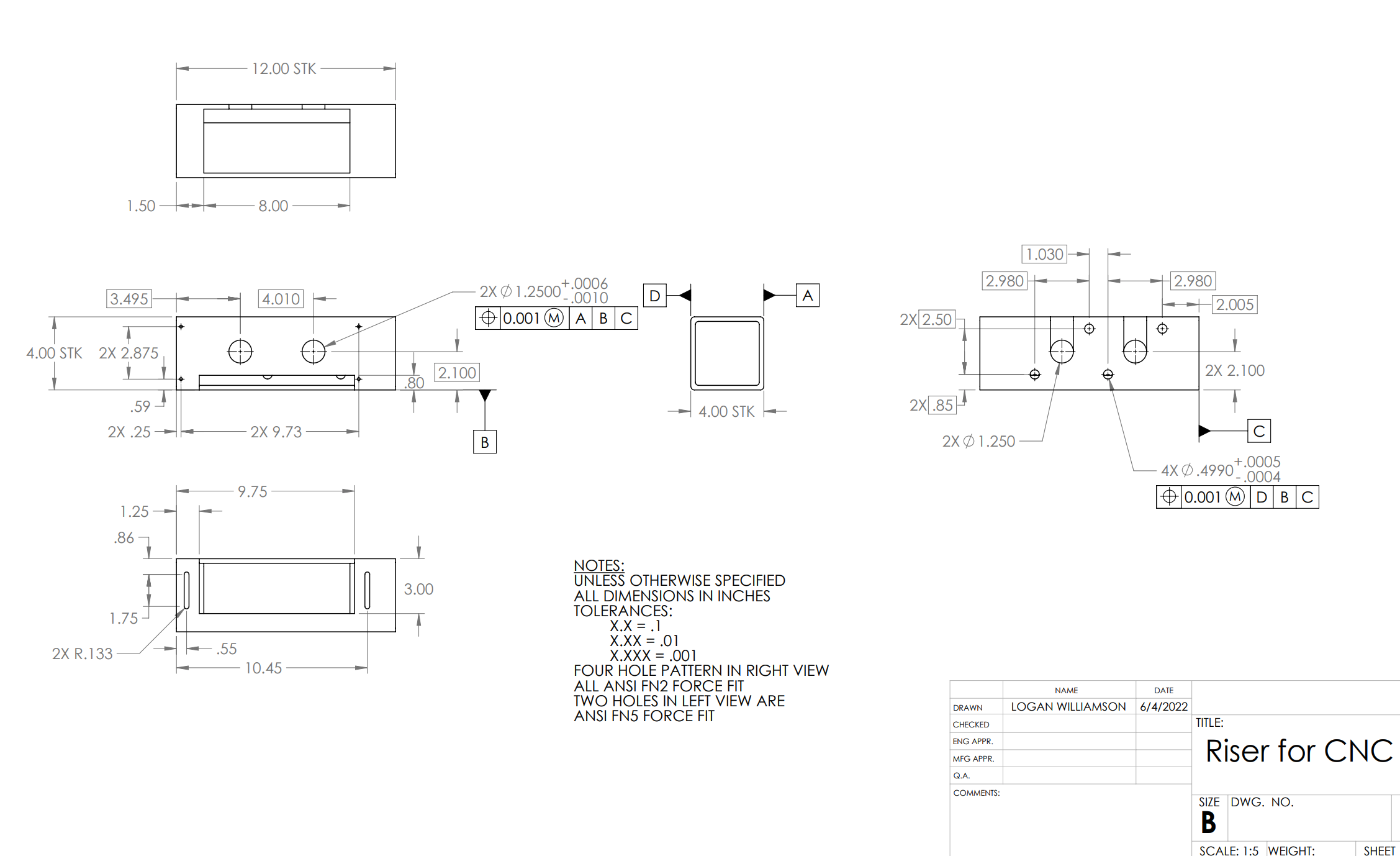
Part Drawing for Frame
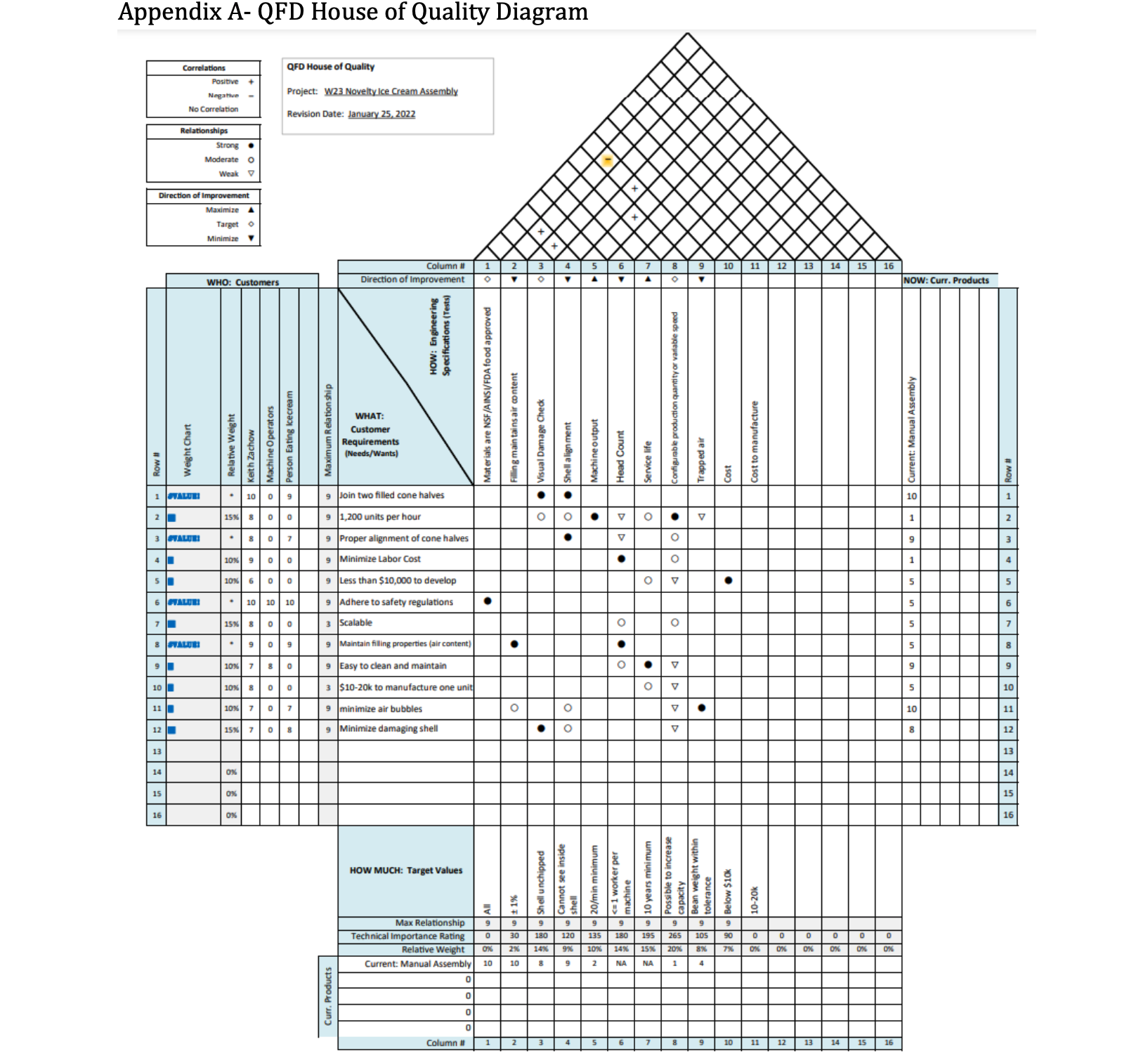
House of Quality Decision matrix
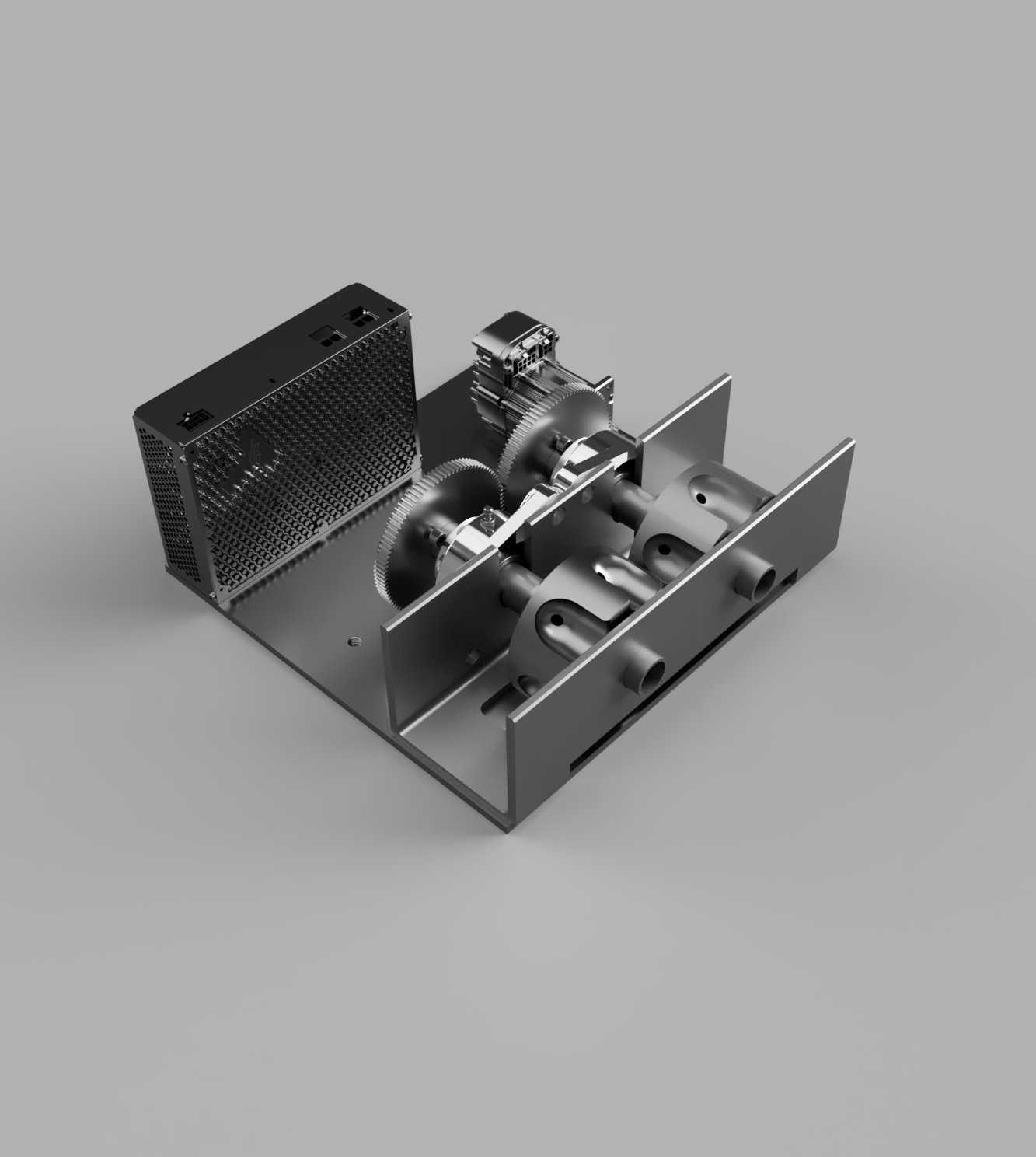
We selected a design with hollow shafts that could pull vacuum in rotating drums to pick up the shells. The drums could lift shells off a conveyer belt, fill them with soft serve at the top of the rotation and drop out the bottom after being joined. Taking advantage of Cal Poly’s agriculture program (which almost never interacts with engineering), we interviewed dairy scientists to learn about the requirements of an industrial machine interacting with ice-cream and selected stainless steel parts and dishwasher safe bearings, making anything that touched food removable. As a machine-shop technician I took the lead on CAD and manufacturing each part.
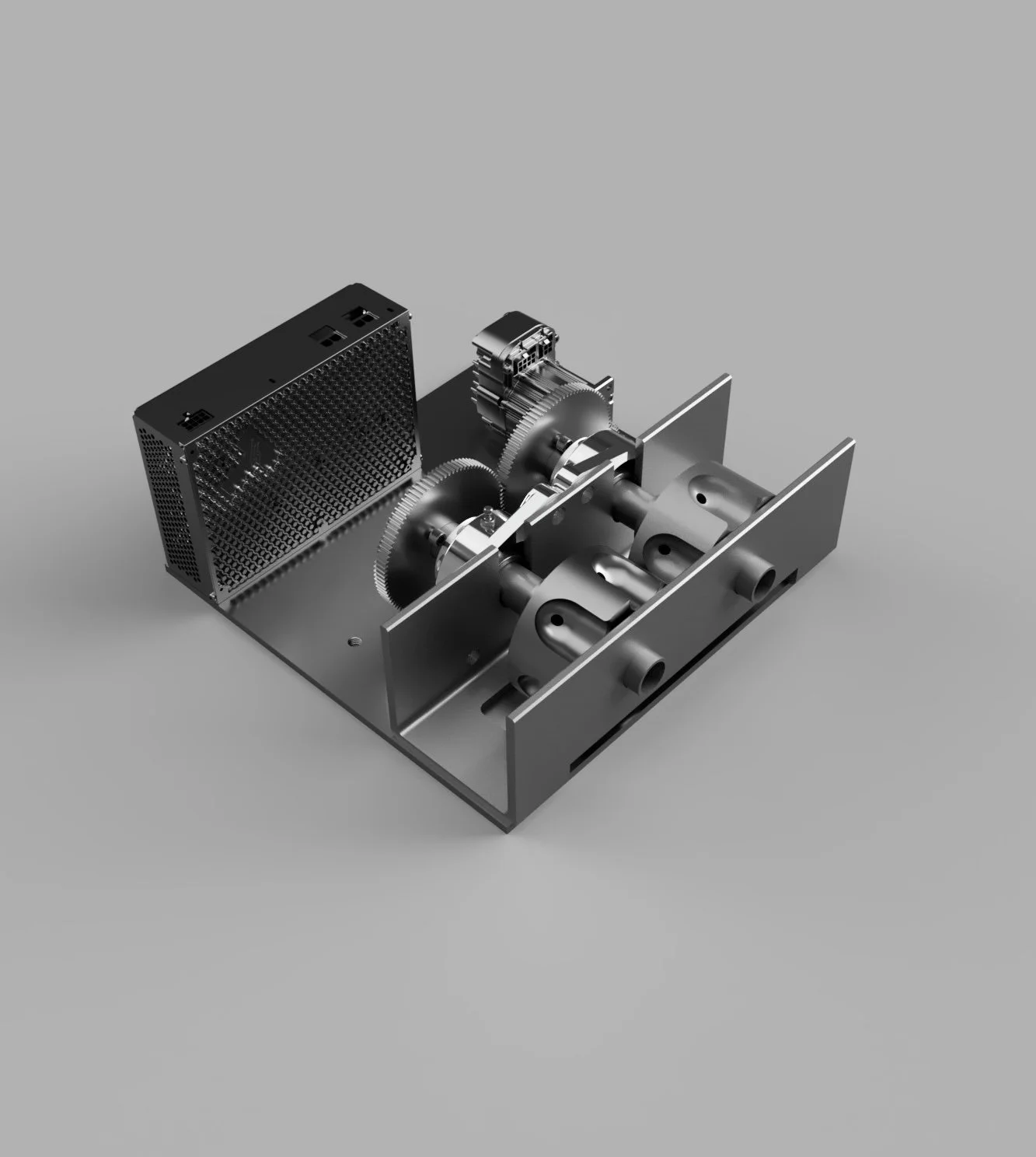
Rendering of CAD. model
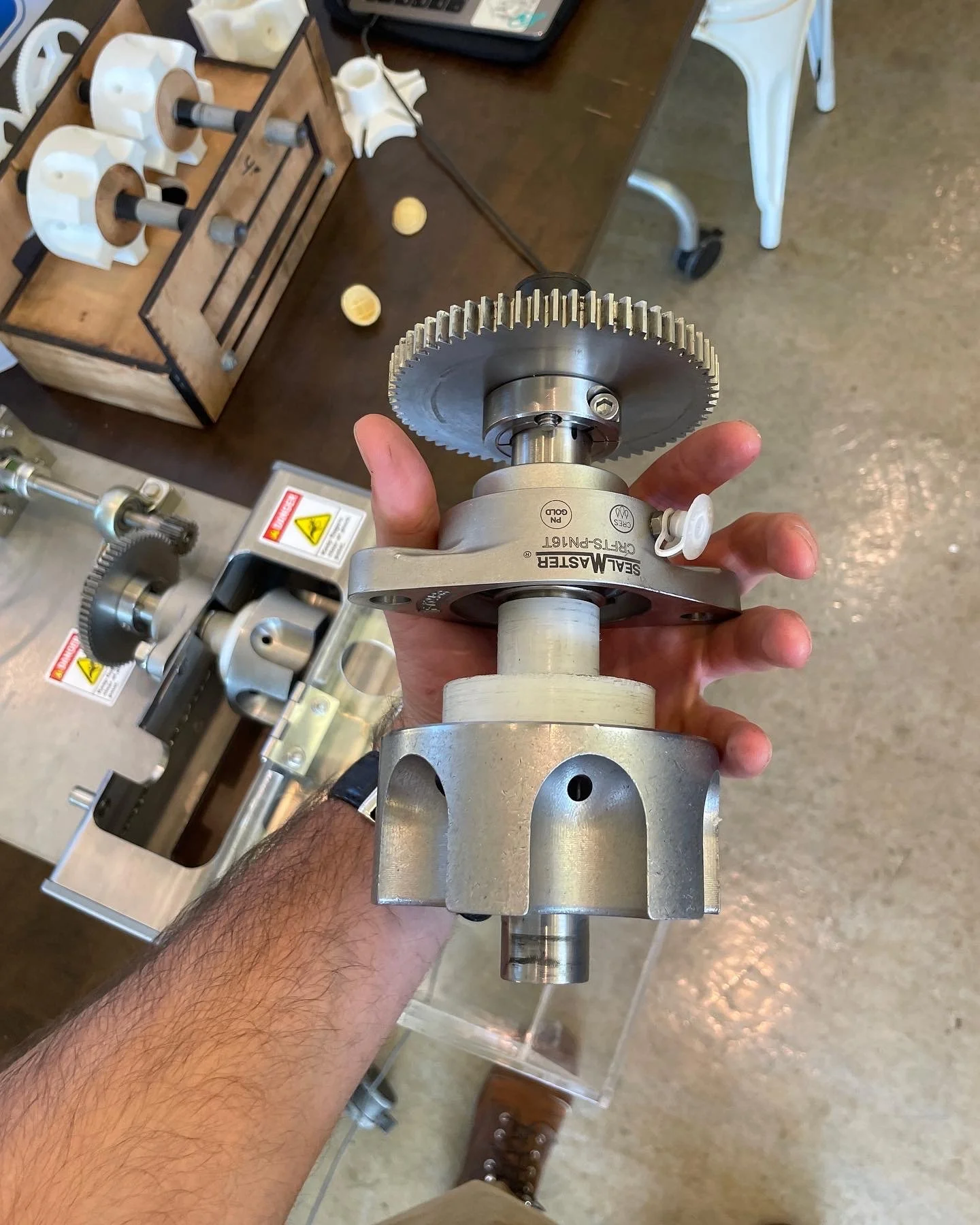
Each vaccum drum assembly is removable for cleaning
First assembly test: marshmallow fluff is used as a non-melting soft serve substitute